Camera Angles
The positioning of the camera in relation to what is being shot. The camera might be at eye level or a high or low angle level.
A high angle shot is usually when the camera is located above the eyeline.

In cinematography, a low-angle shot, is a shot from a camera positioned low on the vertical axis, anywhere below the eyeline, looking up. These types of shots often associate someone with power.
Editing
The stage in the film making process in which sound and images are organised into a narrative.
Continuity Editing - The most common type of editing, it creates a sense of reality and time moving foreward. this technique is often reffered to as invisible editing as ot does not draw attention to the process. This process is often called Linear Narrative - where events happen chronologically.
Credits - The text at the beggining and ending of a film giving details of cast, crew etc.
Cross Cutting - The editing technique of altering, interweaving or interspersing one narrative action scene, sequence or event with another, usually in different locations. In our first piece of media coursework, we did this without even realising the real technical name behind it. By combing different scenes it suggests to the audience that the events are happening simultaneously, also know as parallel action.
Eye line match - Cutting form a character to what the character has been looking at. Alfred Hitchcock's Rear Window, for example, makes frequent use of eyeline matches http://www.youtube.com/watch?v=jswl6ux8kYY
Flashback - a scene or moment in a film which the sudience is shown an event that happened earlier. Likewise a flash forward offers the audience something that will happen in the future. Flashbacks are shown particulary well in Amoros perros and sixth sense.
Montage Editing - different shots sometimes unconnected edited together to create meaning. An example of this type of editing is in Rocky 1 - the training scene.
Fast Paced editing - Rapid succession of many shots, often less than two seconds, this type of editing emphasises tension.
In Jurassic Park the opening scene of about two minutes fourty seconds, it consists of 46 shots. This type of editing makes the audience feel as if they have greater involvement within the film, it has a 'putting you in the situation' effect.
Slow Paced Editing - Long shots often of dialouge, up to 10 - 15 seconds each. This is a good way of showing expressions and emotion. This again is showed in Jurassic Park and yet another one of Stephen Spielberg films - shinglers list (about the hallocaust) This type of editing uses long shot, slowing zooming in to close ups.
Camera Shots
EWS (Extreme Wide Shot) the view is so far from the subject that they are not even visible. This shot is often used as an establishing shot.
VWS (very wide shot) The subject is visible (barely) but the emphasis is still on placing the subject in theor enviroment.
WS (wide shot) The subject takes up the full frame, or at least as much as possible. The same as a long shot.
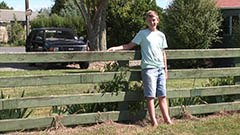
MS (mid shot) shows some part of the subject in more detail whilst still giving an impression of the whole subject.
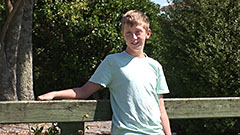
MCU (medium close up) Half way between a MS and a CU
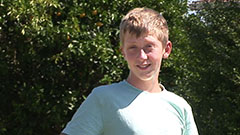
CU (close up) A certain feature or part of the subject takes up the whole frame.
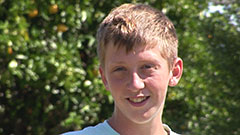
ECU (Extreme Close Up) The ECU gets right in and shows extreme detail.
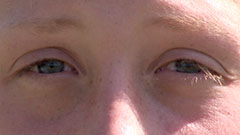
CA (Cutaway) A shot of something other than the current action. This can break up a situation with in a film.
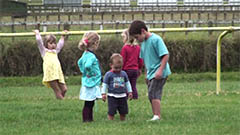
Cut-In shows some part of the subject in detail
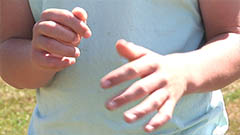
Two Shot, A comfortable shot of two people, framed similarly to a mid shot.
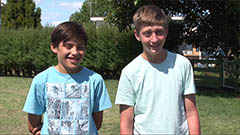
OSS (Over the shoulder shot) Looking from behind a person at the subject. This is the most common shot used in everyday life, used in interviews.
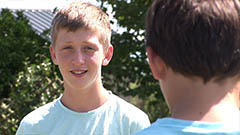
Noddy Shot - usually refers to a shot of the interviewer listening and reacting to the subject, although noddies can be used in drama and other situations. This shot is usually of the interviewer.
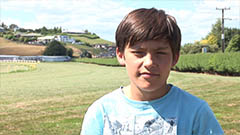
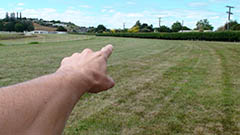
POV (point of View shot - shows a view from the subjects perspective.
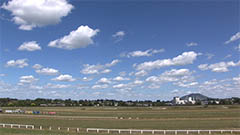
Weather shot - The subject is the weather, usually the sky. Can be used for other purposes.
SOUND:
Diegetic sound - sound that can be heard by the characters within a scene. e.g. a radio or tv being on.
Non- Diegetic sound - Sound only heard by the audience, for example, narration, sountrack or score.
Score - the musical component of the soundtrack, usually composed specifically for the scene.
Narration - A voice telling the narrative as it goes. This can be used both alongside and instead of dialouge within a scene.

No comments:
Post a Comment